Key Takeaways
1. Google Web Guide Changes How Search Results Are Organized
Instead of displaying a simple ranked list of links, Web Guide groups search results into AI-generated topic clusters, helping users explore complex subjects step by step.
2. SEO Is Shifting from Keywords to Topic Authority
Web Guide emphasizes context and topical coverage, meaning websites that thoroughly cover related subjects may appear across multiple clusters.
3. Content Structure Is Becoming More Important
Well-organized content with clear headings, logical sections, and structured explanations helps search engines understand how a page fits into broader topic clusters.
4. Topic Clusters and Pillar Content Are Critical
A strong SEO strategy should include pillar pages supported by detailed subtopic articles, allowing search engines to connect related content.
5. Internal Linking Helps Google Understand Content Relationships
Strategic internal links between related pages help Google interpret site structure and topic relevance, increasing the chances of appearing in guided search paths.
6. Visibility May Expand Even if Clicks Decrease
While AI-driven search features may reduce some direct clicks, high-quality content can appear multiple times across different topic clusters, increasing exposure.
7. SEO Success Will Depend on Demonstrating Expertise
Businesses that build deep topical authority and provide helpful, structured content are more likely to perform well as AI-powered search experiences evolve.
Google’s search engine results page (SERPs) is changing again.The company has introduced Web Guide, an AI-driven experiment currently available in Search Labs. This feature represents one of the biggest changes to how search results are organized and presented.
Instead of showing a traditional ranked list of websites, Web Guide groups results into organized topic clusters. These clusters help users explore complex topics step-by-step by presenting related questions, comparisons, and next actions.
For businesses that rely on organic traffic, this change could reshape how visibility in search works.
Understanding how Web Guide works and how it may influence search engine optimization (SEO) strategies is becoming increasingly important.
In this guide:
• Google Web Guide: A New Search Experience
• What This Means for Your SEO Strategy
• How To Strengthen Your SEO Strategy in the Web Guide Environment
• How Web Guide May Shape the Future of Search
What is Google Web Guide?
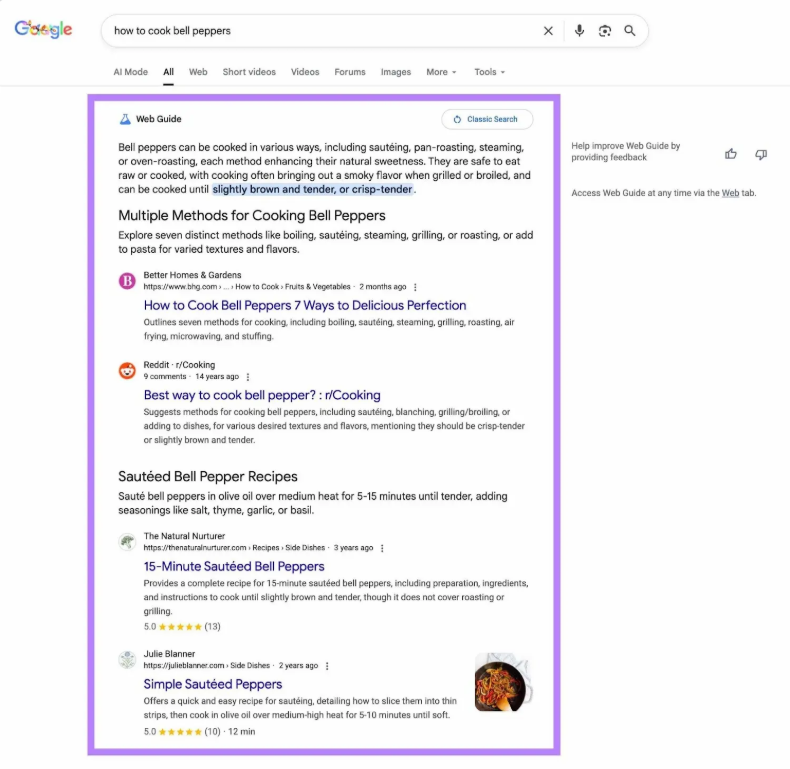
Google Web Guide introduces a very different search experience compared to traditional search results.Instead of presenting a simple list of links, Web Guide organizes results into clusters that break down a topic into smaller sections also called a query fan-out . Each section suggests what users might want to learn next, compare, or explore further.
This structure helps users navigate complex subjects more easily.
For example, a search about website design might include clusters such as:
• Design trends
• Usability principles
• Cost considerations
• Development platforms
Each cluster contains recommended resources and related content that guide users through the topic.This format keeps users exploring inside Google longer because each interaction leads to another structured path of information rather than a single outbound link.
The Web Guide reflects Google’s growing focus on AI-driven search experiences that interpret user intent more deeply.Here’s how the results look like:
Source : Semrush
How Is Web Guide Different from Traditional Search Results, AI Overviews, and AI Mode?
Web Guide represents a shift in how search results are organized and explored. Rather than simply ranking pages or generating answers, it focuses on structuring information so users can navigate topics more intuitively.
Here’s how it compares to Google’s other search experiences:
Traditional Search Results
Traditional search presents a ranked list of webpages based on signals like relevance, authority, and backlinks. Users scan the list and open individual pages to find the information they need. Discovery happens through clicking and evaluating results one by one.
AI Overviews
AI Overviews aggregate information from multiple sources and present a concise summary directly within the search results page. The goal is to answer the user’s query immediately, often reducing the need to visit external websites.
AI Mode
AI Mode transforms search into a conversational interface. Users can ask follow-up questions, refine queries, and explore topics through a chat-style interaction. Like AI Overviews, it prioritizes delivering answers directly within the search experience rather than sending users to individual websites.
Web Guide
Web Guide takes a different approach. Instead of simply ranking pages or summarizing them, it organizes results into topic-based clusters. Each cluster represents a subtopic related to the user’s query, creating a structured pathway for exploring the web.
This makes it easier for users to move from a broad query to deeper, more specific areas of interest without needing to reformulate multiple searches.
In simple terms:
- Traditional Search: ranks content
- AI Overviews: summarizes content
- AI Mode: converses about content
- Web Guide: organizes content into guided topic paths
For publishers and SEOs, this means visibility may increasingly depend not only on ranking for a single query, but also on how well content aligns with the topical clusters that Web Guide generates.
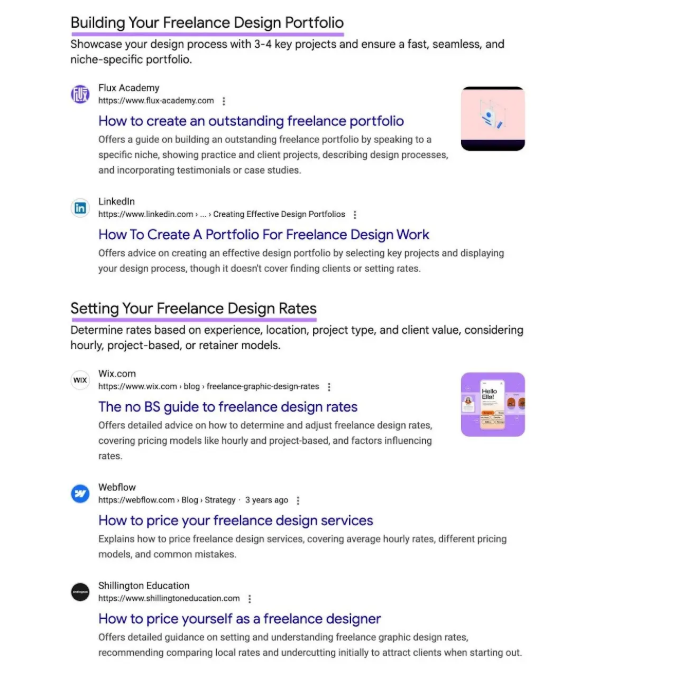
Image Source : Semrush
What This Means for Your SEO Strategy
Web Guide signals a significant shift in how SEO visibility may work in the future.
Instead of competing for a single ranking position, content may appear inside multiple topic clusters depending on how well it addresses different stages of a user’s search journey.
This change moves SEO beyond individual keywords and toward contextual relevance.
The Impact on Visibility
As Google begins answering more questions directly within the search interface, some websites may experience fewer casual clicks.
Users may navigate between clusters and explore answers without immediately leaving the search results page.However, this does not necessarily mean visibility disappears.
Content that clearly explains topics and provides structured information can appear in multiple clusters, increasing exposure across different parts of the search experience.
The Potential Opportunity
Web Guide encourages businesses to rethink how they create content.Rather than targeting isolated keywords, successful SEO strategies will focus on explaining topics thoroughly and logically.
Well-structured content that answers related questions step-by-step may appear multiple times within the guided search flow.This can improve visibility even if individual clicks decrease.
How To Strengthen Your SEO Strategy in the Web Guide Environment
Because Web Guide organizes search results around topics, businesses should focus on creating content that is structured, connected, and comprehensive.
Here are several ways to adapt.
1. Focus on Structured Content
Content should follow a clear structure that makes topics easy to understand.
Logical headings, organized sections, and concise explanations help search engines identify how your content fits within broader subject clusters.
This structure allows Google to interpret meaning and context rather than relying solely on individual keywords.
2. Build Topic Clusters
One effective strategy is organizing content around topic clusters.A central page often called a pillar page covers a broader subject. Supporting articles then explore related subtopics in greater detail.
For example, a web design pillar page might connect to articles about:
• Website accessibility
• UX design principles
• Mobile optimization
• Page speed improvements
This approach helps search engines understand how your content connects across a broader topic.
3. Strengthen Internal Linking
Internal links help search engines understand relationships between pages on your website.
When related content links together logically, search engines can interpret the full structure of your site.
This increases the likelihood that different pages may appear at multiple stages of a user’s search journey.
How Web Guide May Shape the Future of Search
Google Web Guide is still in development, but it offers a glimpse into how search may evolve.
Search results are gradually becoming more conversational, task-focused, and guided by artificial intelligence.
Rather than simply presenting information, search engines are beginning to guide users through entire topics and decision-making processes.
For businesses, this means future SEO success may depend on:
• Demonstrating expertise in specific topics
• Organizing content clearly
• Providing helpful, in-depth information
Companies that build strong topical authority may be more likely to appear throughout guided search experiences.
Preparing Your Business for the Next Phase of Search
Search continues to evolve as Google introduces new technologies and AI-driven features.Businesses that rely on organic visibility should focus on building structured, informative content that supports real user needs.
Organizations that adapt their SEO strategies early will be better positioned as search continues to change.
For businesses looking to improve their online visibility, the team at Starfire Web Design helps companies develop SEO and web design strategies that support long-term growth in evolving search environments.
Frequently Asked Questions
What is Google Web Guide?
Google Web Guide is an experimental search feature that organizes search results into topic clusters. It helps users explore complex topics by guiding them through related questions and resources.
How is Web Guide different from traditional search results?
Traditional search results show a ranked list of links. Web Guide groups results into structured categories, helping users explore a topic step-by-step.
Why is Google introducing Web Guide?
The feature reflects Google’s shift toward AI-driven search experiences that focus on understanding user intent and guiding people through information.
Will Web Guide change how SEO works?
Web Guide may shift SEO away from individual keyword rankings toward topic authority and structured content that answers related questions.
Should businesses adjust their SEO strategy?
Businesses should focus on creating well-organized content, building topic clusters, and strengthening internal linking to support evolving search features.
